Showing posts with label dodge. Show all posts

Wednesday, August 8, 2012

Taillights - the best and the worst

Mitsubishi Mirage
I saw an article on Autoblog yesterday reporting that Mitsubishi was considering bringing the new Mirage (pictured above) to the US to "reinvigorate" its ailing lineup. While I agree that Mitsubishi needs to inject some excitement into its lineup, this Mirage certainly isn't going to do it. There are a lot of things I don't like about this car, but most importantly its nondescript, blobby taillights, which make the car look 10 years old. The styling of the Mirage looks instantly dated compared to other subcompacts on the market, especially those from Hyundai and Kia. The Mirage inspired me to think of some other automakers who haven't paid enough attention to taillights, and some that did. Click through for some examples:


First some boring taillights:
Toyota Corolla
The Corolla's taillights could be on any car. There is nothing distinct about them that would allow me to instantly identify the car as a Corolla.

Mazda 5
The Mazda 5's taillights look like droopy, sad eyes. They're too low in proportion to the rest of the back end.

Subaru XV
The XV is a rare example of a Subaru that excites me. The boxy lines mixed with curves are actually pretty cool...so I was disappointed when I saw the taillights, which look like an afterthought. The taillights are so nondescript, that they almost ruin the rear end. The black body cladding on the lower corners of the car saves the day, fortunately.

Subaru BR-Z / Scion FR-S
I know the new Toyotaru RWD project has a lot of fans, but I haven't caught the wave. I'm sure it is a blast to drive and drift, but I don't think Toyota and Subaru pushed the boundaries enough when it came to styling, and the taillights epitomize this. They are too small and seem misplaced with regard to the rest of the design. It's almost like they were aiming to copy the BMW Z4's taillights but had to tweak them enough so as to avoid legal trouble...

VW Tiguan
I like the Tiguan overall, but think VW could have gone further with the taillights. On the next model, make them a little more expressive!

Now for some exciting taillights...
Dodge Charger
The Charger's taillights are easily the most engaging on the market today. Looks great in the daylight and even better at night!

Volvo XC60
I love the curviness of the XC60's taillights, which are easy to see at nighttime, but also look great (just like the rest of the SUV).

Mercedes CLS
Goes without saying, but the CLS' taillights look like a million bucks.

BMW 5-Series
The 5-Series has always embedded LED "stripes" in their taillights, which look awesome at night.
Ford Mustang
Check out the new Mustang's taillights. Against the black plastic, the red LEDs pop at night.

Kia Optima
The taillights are one of many reasons why I love the Kia Optima...one of the first exciting midsize cars available in awhile.

Sunday, July 22, 2012

10 boring cars: neither attractive nor ugly

Acura RL / RLX
When Acura released images of the new RLX, I was disappointed. I think the swoopy character line on the sides is homely, and the rest of car is undifferentiated from a lot of the other midsize luxury cars on the market. The RLX made me think of some other cars that are neither good looking or unattractive, but rather boring. Click through for 10 examples.


Acura RL
1. Acura RL: As mentioned in the intro, I've never understood where the RL fits in. The design is completely dated, and could have potentially looked cutting edge 10 years ago. It's a perfectly capable car, but probably not what Acura executives would prefer to be their flagship offering.

Lexus ES
2. Lexus ES: Yawn...the ES is soooo boring. The first-generation model had cool taillights that looked like a baby LS, but the current model looks more like a tarted-up Camry than ever. The average ES-owner is probably well into retirement age (not that there's anything wrong with that!), and reviewers consistently describe how bland the ES's performance and handling are.

Audi A8
3. Audi A8: The Audi A8 is by no means ugly; in fact, it is quite handsome. However, it does not have the excitement that the S-Class or 7-Series have. The A8 is actually a fairly boxy design if you think about it. What makes the A8 work are the subtle curves, technology, and, frankly, the Audi logo. I would love to own an A8, but it is not the first car that comes to mind when I think "excitement".

Honda Pilot
4. Honda Pilot: My guess is that Honda saw the success of the Jeep, Hummer, and wanted in on the action. While the resulting Pilot is similarly boxy, it is by no means rugged or cool. It is extremely bland and devoid of character. Not ugly, just boring.

Toyota Corolla
5. Toyota Corolla: Ugh. Renting a compact car and winding up with the Corolla is like drawing the short straw. Everyone knows someone with a Corolla. They are endlessly reliable, last forever, and capable enough to handle the average person's daily commute. However, that makes the Corolla ubiquitous, and it happens to be a boring design as well! When the current generation first came out, it was stylish, but Toyota hasn't made enough changes over the years to substantially update the car, and the competition has certainly caught up.

Dodge Journey
6. Dodge Journey: Everyone's heard of the Dodge Durango, but most people haven't heard of the Journey. The interior was never up to par, but there is something too "dainty" about the exterior. I don't know what it is...maybe the chrome accents? Taking a step back, the design looks more like a minivan than a rugged SUV. It's not ugly, but falls through the cracks because of its run-of-the-mill style.

Kia Forte
7. Kia Forte: Most of Kia's current lineup is, dare I say, exciting. Cars like the Optima, Elantra, and Sportage have brought Kia's reputation to a new level. The Forte was the first car to preview Kia's new design language, but compared to the others cars I just mentioned, the Forte looks tame in comparison. It is a good design, but there is not enough going on for the Forte to resonate in people's minds. Hopefully the next model will inject some more uniqueness.

Nissan Altima
8. Nissan Altima: As I mentioned in a previous post, I don't understand the Nissan Altima. Unlike the Fusion and Sonata, both of which are beautiful designs, the Altima is blobby and disproportioned. In 5 years time, it will blend in on the highway, just like every other previous Altima has.

Scion xD
9. Scion xD: The Scion xB has always had a cult following for its boxiness. The tC is a cool coupe with lots of standard features. However, the xD makes no sense. It costs about as much as the xB, but is smaller and isn't as distinct looking. The xD replaced the xA, which also prompted the question, "what's the point?"
Subaru Forester
10. Subaru Forester: I understand why people - especially in the Northeast - get Foresters. They are good in the snow and have plenty of room to store things in the back. However, it is so nondescript. Some people call it an SUV, others (like me) call it a wagon, so it's stuck somewhere in the middle and suffers from weird proportionality.

Thursday, April 26, 2012

The Acura ILX ... and other examples of forced corporate design language

Acura ILX
In my opinion, there is something unnatural and forced-looking about the new Acura ILX. I would never pay $25-30k for this car. It is a Civic-based competitor to other sub-entry-level luxury cars like the Buick Verano and Audi A3, and I think Acura really missed a great opportunity here. The Acura family grille doesn't bother me (although I know some would disagree) as much as the ugly crease running along the side of the car and the fact that the door handles are IDENTICAL to those on the Civic. Yeah, Acura - don't think I didn't notice that! On its own, the door handle issue is unacceptable (see previous blog post). The rear end is marginally attractive but boring, and the interior is a watered down version of the TSX. The 150hp I-4 engine is probably no more interesting to drive than a Civic. The Integra and RSX were also Civic-based, but they somehow worked because they attempted to be sporty and scrappy, as opposed to luxurious, as the ILX does. I could imagine a Civic to be sporty, but not luxurious.

However, since I haven't driven or even sat in the ILX, I don't intend to review the car. Instead, I wish to point out a trend that the ILX exemplifies, that many car makers have failed when they try to push corporate design language downwards to the base model. Click through for some more examples.


Dodge Avenger
I don't dislike the Avenger, but I don't love it either. The Avenger is an obvious attempt to apply the Charger's aggressive lines on Chrysler's midsize platform. Chrysler showed a strong effort, but somehow they lost the Charger's edginess along the way. The crosshair grille, character lines on the rear doors, and distinctive taillights of the Charger are present, but toned down too much.

Mercedes GLK
As a Mercedes fan, it pains me to say it, but the GLK looks like a mess - a confluence of various design cues found on other Mercedes models that don't jive when mixed together. I see a little C, G, and M-Class in the GLK, but the mini-SUV is too boxy in places it shouldn't be, and too round in other places. The redesigned version (not shown here) is a little better but doesn't completely solve the problem.

Lincoln MKZ
Lincoln MKZ
The Lincoln MKZ is another example of wrongly forced corporate design language. Lincoln was obviously given the Ford Fusion platform and told to turn brass into gold. The designers must have thought they needed a "Lincoln-like" grille and taillights, so they slapped them on. The resulting design was an awkwardly edited Fusion clone. Lincoln did not fool anyone; there is a good reason why their sales have not been very good. I give Lincoln designers kudos for trying to substantially differentiate the dashboard, but unfortunately the result was terrible. The dashboard looked like a relic from the '60s or '70s and was oddly vertically oriented, and not very ergonomic. Fortunately, the interior was overhauled in the second-gen model.

Mazda 3
Mazda 3
The last example I'll provide is the Mazda 3. I know there are a lot of fans out there, but if I'm being honest, I think the first-gen Mazda 3 is much more attractive than the current version. I've always liked the styling on the Mazda 6 - including the latest version - but it somehow didn't translate gracefully on the smaller Mazda 3. The front fascia is a matter of taste, but I think it is way too big and cheesy. The rear end is too boxy in my opinion, and I don't like the shape of the taillights. Overall, I think Mazda tried way too hard to squeeze the attractive parts of the 6 on the 3, and it backfired.

Saturday, September 24, 2011

Favorite Car Lists #3: Coupes/Convertibles

Mercedes SLS AMG
It has been awhile, but it's time for the third installment of my favorite car lists - this time, coupes and convertibles (basically, anything with 2-3 doors). Click through to see - do you agree with my lists?


If I had $30,000 to spend on a coupe/convertible, I would buy:
1. Volkswagen GTI
2. Dodge Challenger
3. Mini Cooper S
4. Chevrolet Camaro
5. Volkswagen Beetle

If I had $60,000 to spend on a coupe/convertible, I would buy:
1. Mercedes E350 Coupe
2. Mercedes C350 Coupe
3. Audi S5
4. Cadillac CTS Coupe
5. BMW M3 Coupe

If I had $100,000 to spend on a coupe/convertible, I would buy:
1. Porsche 911 Targa 4
2. Mercedes C63 AMG Coupe
3. Jaguar XKR
4. Cadillac CTS-V Coupe
5. Mercedes E350 Coupe

If I had $200,000 to spend on a coupe/convertible, I would buy:
1. Mercedes SLS AMG
2. Aston Martin V12 Vantage
3. Audi R8
4. Maserati Gran Turismo S
5. Porsche 911 Turbo S

If money was not an object, I would buy the following coupes/convertibles:
1. Bugatti Veyron
2. Mercedes SLS AMG
3. Lamborghini Aventador
4. Lexus LFA
5. Aston Martin One-77
Honorable Mention: Ferrari 458 Italia, McLaren MP4-12C

Tuesday, September 20, 2011

Why does Suzuki still sell cars in the US?

Suzuki Equator
I like to think that I keep up with the car industry, but I had NO idea Suzuki sold the Equator pickup...let alone the fact that they have been selling the truck since 2009! I have never EVER seen one on the road. This lazy excuse of a Nissan Frontier rebadge is exactly why Suzuki has had trouble gaining traction in the US in the last 20 years. Most of Suzuki's cars have been sourced from other automakers, notably through its partnership with GM/Daewoo. Unless it changes its strategy, I give the Suzuki US brand another 5-10 years before going the way of Isuzu -- that is, extinct. Click through to read why...


Suzuki Swift
Let's start by discussing Suzuki's smallest offering, the Swift, which is not sold in the US, but should be. For all intents and purposes, this is a perfectly competent car: reasonably attractive, sporty, and has competitive interior materials. Suzuki has likely resisted bringing the latest-gen Swift to the states for a few reasons: 1) an inability to effectively market its brand, 2) historically soft subcompact sales in the US (until recently) and 3) the troubled past of the Swift name. When I think of the Swift, I instantly think of the lazily rebadged Geo/Chevy Metro, one of the ugliest, most pointless subcompacts ever to hit US dealerships...

Second-gen Suzuki Swift (aka Geo Metro)

Does this picture ring a bell? None of these cars have held up over time, including this ripe example.  The new Swift is not rebadged at all, but Suzuki would need to change the name to give the car a fresh start.

Suzuki SX4 / Liana
The SX4, formerly known as the Aerio, is also known as the Liana in other parts of the world. This car was co-developed by Fiat and was designed by Italdesign Guigiaro, so it definitely has the right ingredients for a winning design. The SX4 also has had a successful run in the rally circuit. In addition, over the last 10 years, the Liana/SX4 has been featured in Top Gear as the Star in a Reasonably Priced Car both in the UK and US. Despite all this, I rarely see SX4s on the road, which I believe is the result of weak consumer marketing. Buyers of cheap compacts cars aren't necessarily watching Top Gear and WRC races. I also don't like the odd piece of glass between the A-pillar and door frame, which makes the car look cheap.

Suzuki Forenza
The now-defunct Forenza sedan / Reno hatchback, also designed by Italdesign, is a pair of reasonably attractive cars also sold under a plethora of names around the world, ranging from the Chevy Lacetti (as seen in the UK Top Gear), Holden Viva in Australia, Buick Excelle, Daewoo Nubira, and a variety of other names. After Daewoo left the US as an independent brand, its parent GM decided to pump their econoboxes through every partner and sub-brand possible, and the US got the Suzuki Forenza. At the end of the day, poor marketing killed the success of this bland yet competent car.

Suzuki Verona
The Verona, also now defunct, was another forgettable Italdesigned GM/Daewoo concoction, competent but not relevant enough to compete with the Camry, Accord, etc. If GM felt so highly about this design, wouldn't they have used it in place of their Malibu / Impala? The truth is, they didn't, so they gave the Verona to Suzuki to sell. Its success was miserable.

Suzuki Kizashi
Starting to see a trend? The Kizashi is Suzuki's replacement for the unmemorable Verona. It consistently performs well in comparison tests, but you see none on the road because of lack of marketing (and probably because of that ugly Lincoln Continental-style hump on the trunklid...ugly!). The front end, side profiles, and interior of the car are attractive, but I don't anticipate this car being successful enough to make a compelling business case in the US.

Suzuki Grand Vitara
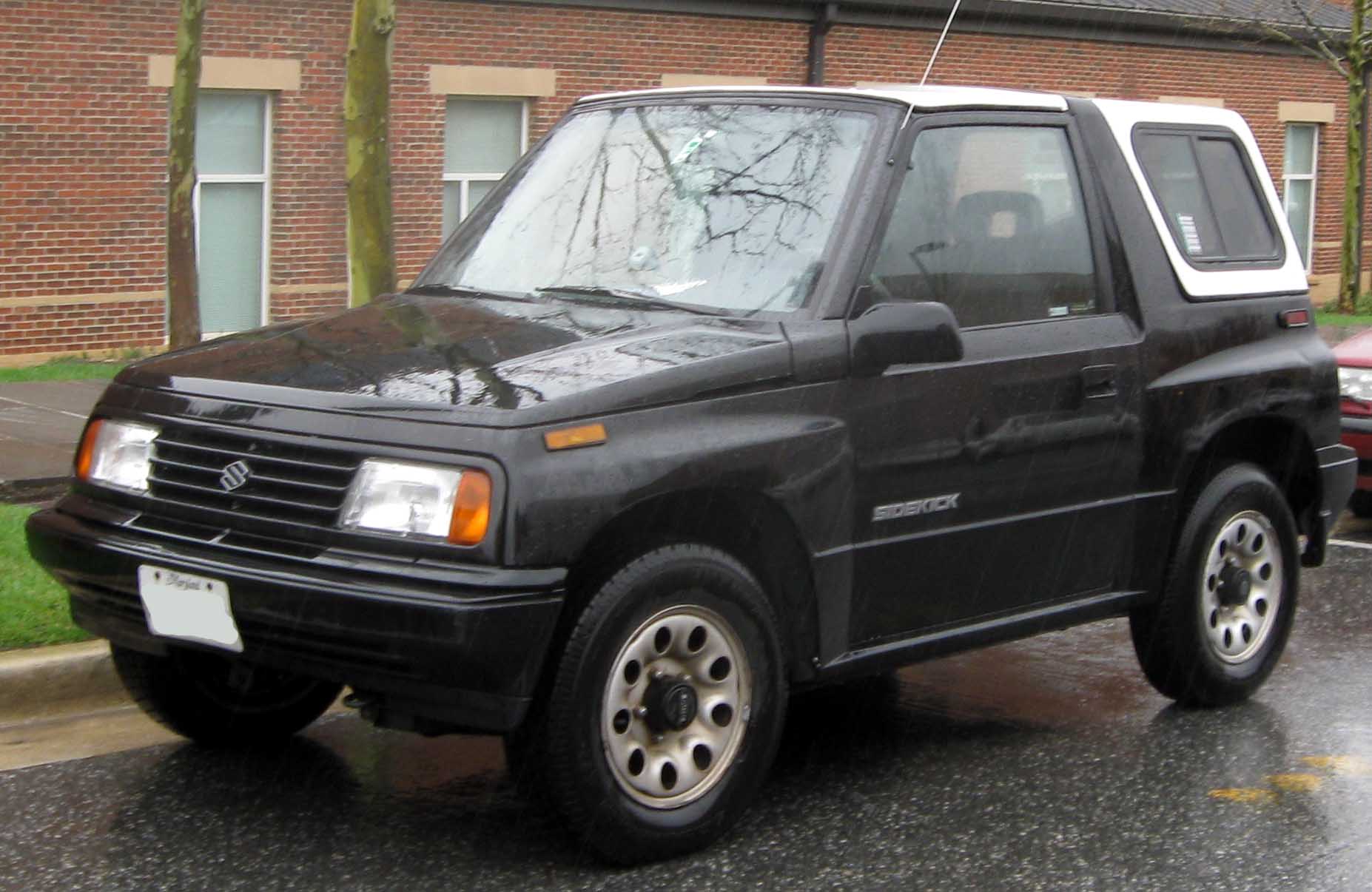
Suzuki has historically seen success in the SUV market, and this is where they should continue to focus their efforts. The Grand Vitara (and the larger and slightly uglier XL7) is based on the Chevy Equinox platform, but is altered enough so as to mask the part-sharing. This is the one Suzuki you DO see on the road because it is consistent with the company's heritage. The Vitara is the modern-day replacement for the Sidekick, which was very successful in the US, along with its rebadged sister, the Chevy/Geo Tracker.

Suzuki Sidekick
I can't say the Sidekick has held up very well over the years, but at its time, it held a dominating position in the small, fun SUV category - a more refined alternative to the Jeep Wrangler. The convertible top (now absent from the Vitara) was an appealing feature for young buyers.

So, my advice for Suzuki? Marketing is not your forte, so stop selling cars no one knows about or cares about. Scale down your partnership with GM/Daewoo, which isn't helping you. Focus on the small SUV market where you actually have brand equity, and actually create something innovative people WANT to drive. Otherwise, you will always be an also-ran, no matter who you get to design your cars (ahem...Italdesign). Selling a poorly rebadged Nissan Frontier does not fool buyers, just as selling a rebadged Dodge Dakota did not fare well with Mitsubishi.

Monday, September 12, 2011

Volvo S40 review...an interesting, yet odd car


A few months ago, Volvo announced that the S40 sedan and V50 wagon will soon be discontinued. After I had a chance to flog a Zipcar S40 this weekend, I understand why...sort of. The S40 has a number of lovable quirks, but I don't think it ever found its place amongst the sea of other entry luxury sedans. Click through to see my impressions.


The S40 never competed with the serious contenders -- the C-Class, 3-Series, A4, IS, G, TL, and CTS -- but it never intended to. It is priced in the mid-to-high $20ks, well below the aforementioned competitors, and in part due to its smaller size, the S40 finds itself competing with entry-entry-luxury sedans, like the Saab 9-3, Acura TSX, and Audi A3. Buyers in this range want a sporty European sedan without the high price point. The Chrysler 300, Buick Regal, Dodge Charger are larger yet attractive, luxurious American alternatives, but don't likely raise the pulse of a prospective S40 buyer. A top-of-the-line Toyota Camry, Hyundai Sonata, Honda Accord, Nissan Altima, or Chevy Malibu may have some of the creature comforts the S40 buyer is looking for, but are probably way too boring. Volvo is a respectable name associated with safety, and the S40 has an intelligent, attractive Swedish-looking design, inside and out. The S40 is largely unchanged since its redesign in 2004, but it still looks fantastic on the road. When you tell your co-workers that you drive a Volvo, you will appear to have good taste in a humble manner.


So, I get the competitive positioning, but how is the car to drive? Unfortunately, it's a mixed bag. The biggest disappointment was the car's acceleration. The only engine available is a 227hp 5-cylinder turbocharged engine, but I felt like the S40 only had 2 speeds: low and low/medium. If I wanted to go fast, mashing the gas pedal to the ground would produce the same predetermined-feeling acceleration trajectory as if I was to step on the pedal halfway. I don't think my lack of excitement is caused by general turbo lag. In comparison, I felt like the turbocharged Audi A3 was ready for blast-off at my beck and call. The various turbo Saabs I've driven (yes, including my '92 9000!) were peppier than the S40. One positive aspect of the engine: its sound. The 5-cylinder has a pleasing purring sound, quite similar to the VW Golf's 5-cylinder engine.


The S40 has a decidedly Swedish-looking interior. Some people don't love it, but I think the thin center console is really attractive and practical, since you can store things behind it. The Zipcar model I drove had fake plastic looking metallic trim, and would look much better with the optional wood grain pattern. Compared to the A3, the radio and dashboard gauges look ancient...a reminder that the car hasn't had a meaningful update since 2004. However, all of the basic ingredients of an entry-luxury sedan interior are there: leather seats, in-dash phone, premium audio, sunroof, power and heated seats, automatic climate control, etc. The seats are very ergonomic and great for long trips.

Don't mind my leg in the picture :)
This weekend I had to buy a coffee table and area rug at Ikea. The Ford Escape or Toyota Tacoma may have been more practical, but I really wanted to drive a Swedish car to Ikea (now I can cross that off my bucket list). The coffee table was packaged (unassembled, of course) in a thin but wide box (55" x 31" x 3") and the store clerk worried that it may not fit in a standard sized sedan. However, the rear seats folded down easily and the large box and long rug surprisingly fit in the trunk quite nicely. Major +1 in my book.

Plenty o' room for cargo!

To summarize, would I buy this car if I was in the market? Probably not - the Audi A3 would win without question. However, the S40 would probably win my money over the Saab 9-3. While Volvo strategically sends the S40 to its grave, the entire Saab brand is on the brink of extinction.

Here are the pros and cons of the S40:

Pros:
  • Looks fantastic inside and out
  • Ample room for large objects
  • Decent brand prestige
  • Good value for the money - premium features for an entry-entry luxury price
Cons:
  • Sluggish engine
  • "Aluminum" trim looks and feels cheap
  • Outdated audio / entertainment interface

Saturday, August 6, 2011

Has-beens: Cars that have lost their cachet

Chrysler PT Cruiser
There are a handful of car models who were once celebrated, but have since lost their luster. These cars usually fit into 2 buckets:
  • Cars that were awesome when they were released, but have since lost their novelty
  • Cars that were awesome in the 50s/60s/70s, but due to cost cutting have become terrible. This is an American phenomenon, since Japanese car makers have not been in the states long enough to establish meaningful brand history.
 I've highlighted a few examples - click through to see.


Category #1: Cars that have lost their novelty
Chrysler PT Cruiser
When it first came out in 2000, there was nothing else like the PT Cruiser. It had dramatic retro styling, was incredibly affordable, and looked like a mix between a hot rod and an SUV/crossover (neither of which it actually was). However, the Cruiser did not age well, and as you saw more on the road its novelty wore off fast. If you look close enough, you'll see a crummy compact car whose quality could not compete with the Japanese offerings. Chrysler stopped making the Cruiser last year.

Mini Cooper
When BMW released the new Mini Cooper in 2001, it was very popular. Its UK roots and cute styling gave the car panache, and BMW made sure the car was of great quality. However, for $20-30k, I don't think this car is a very good value. It's too small and impractical for people in the suburbs or rural areas, and while the engine is quick against the car's light weight, it's not a sports car by any means. Also, 10 years later, I see too many on the road and I'm sick of the styling, which reminds me of Austin Powers. Mini has tried to broaden its range to SUVs, convertibles, coupes, and the slightly larger Clubman, probably because people have begun to lose fondness for the little car.

Scion xB
In 2003, Toyota's new Scion brand was very polarizing - some people thought their designs were cool, but others found them to be ugly and juvenile. In the end, Scions have seemed to appeal to young teenagers who want to customize their cars, and paradoxically, retirees who need an affordable compact hatchback. I believe Scion's current designs are watered down and have lost their edginess. They have gained many of the androgynous bumps and lumps that Toyota's main line suffers from. It's no secret that the brand has been struggling as of late, since parents are no longer able to afford to buy a car for their kids, and retirees are holding on their old cars longer. I wonder how sustainable the brand will be going forward.

Audi TT
The Audi TT looks like a cross between a Porsche 911 and VW Beetle, and was appropriately priced somewhere in the middle. Its retro styling, which was unique when it was released in 1998, now looks more cutesy than cute. The latest iteration does have a more masculine, sporty stance, but if I was to spend $35-40k on a sports car, I'm not sure the TT would make the list. Why not get an A5, which has similar performance characteristics, but has enough space to feel comfortable on a long trip? The base TT also does not have the blistering fast qualities you would expect from a car that aspires to be a sports car.

Chrysler 300
For a number of reasons, the 300 was an instant hit when it was released in 2005. It was the first decent looking product Chrysler had produced in years and marked a departure from the company's cab-forward designs. The design cues were a smart, modern take on the original 300C. The interior was nothing to write home about, but the exterior was a good mix of retro and modern. 6 years later, I think the front end is too retro for today's tastes, and the car has become popular with retirees, fleets, and livery. Sometimes you'll see a rapper wannabe who has distastefully put 24-inch DUB wheels on the car and swapped out the grille. I see too many on the road, and the styling looks too commonplace today. The updated iteration in 2011 looks almost identical to the outgoing model, although Chrysler claims every body part is new...

Category #2: Remakes gone bad
1969 Chevy Nova

1985-1988 Chevy Nova
Can anyone help me understand how the top picture became the bottom picture? A Hummer and a Volt has more in common. The Nova has historically been a cool car - a muscle car by any standard. When GM teamed up with Toyota in 1985 to resurrect the Nova name, the ugly rebadged Corolla they concocted sullied the Nova name forever, never to appear in Chevy's lineup ever again. It was so embarrassing, Chevy had to create the Geo brand to sell their Toyota joint-venture cars. The Nova became the equally ugly and unloved Geo Prism.


1967 Buick Skylark
1992 Buick Skylark
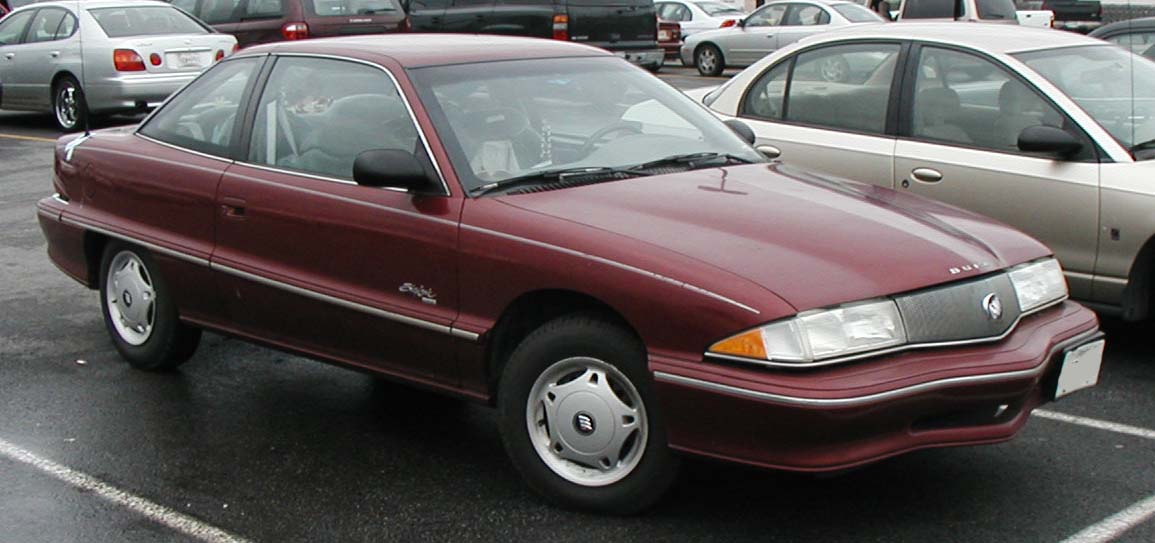
One of these days, I will put together a list of the ugliest cars in history...the 1992-1998 Buick Skylark will definitely be on that list. There is nothing redeeming about this remake, which in my opinion ruins the Skylark name for good. You can just picture the designers at GM writing ideas on a whiteboard on how to make a throwback to Buick's designs from the '50s and '60s. Pointed front end? Check. Covered rear wheels? Check. The only missing design cue is portholes. The rear end is stubby, the front end is hideous, the entire car is wrapped in ugly body cladding (and the pinstripe does not help), and the interior is a typical overdesigned relic of the early '90s from GM.


1964 Chevy Impala
2006-present Chevy Impala
See my article on the Chevy Impala - nuff said.


1968 Dodge Charger
2006-2010 Dodge Charger
The Charger has always been a 2-door, so why did Dodge resurrect the name as a -door after a 19 year pause? Don't get me wrong, I actually think the new Charger is a cool car and has much more personality than its Japanese counterparts, but it is such a departure from what the Charger has been historically. To recap: not a bad car, but not what I would have expected.


1968 Pontiac GTO
2005 Pontiac GTO
The old GTO is a properly cool muscle car designed by the late great John DeLorean. The new GTO, which was produced from 2004-2006, has a large cult following, but I never liked it. 5 years ago, it was the cheapest way to get 400+ horsepower for under $30k, but the styling is so boring. GM thought it could simply rebadge an Australian Holden Commodore as a Pontiac in the States, but it ended up looking more like a mid-90s Grand Am than what a modern-day GTO should look like. The interior was also standard GM fare - nothing fun or special.
1969 Pontiac LeMans

1992 Pontiac LeMans
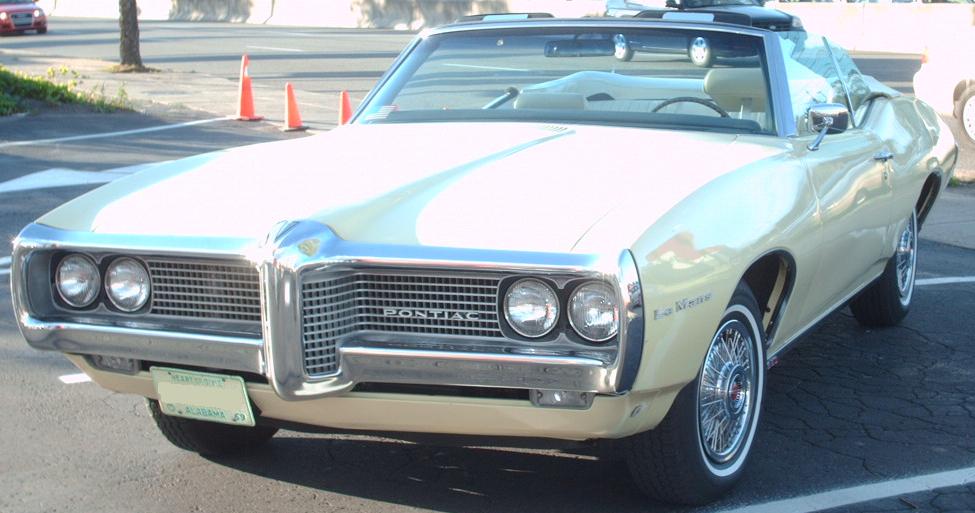
A lot of things bother me about this early-90s remake of the LeMans, but most of all is that ugly black plastic on the C-pillar, which exists because it was a cheap way to cover up a bad design. Everything about this car is ugly, uncool, and cheap. This was the start to GM's maligned relationship with Daewoo, which ended up flooding the American and European markets (through Opel) with small, ugly designs. Why did they have to name this little runt the "LeMans"? GM's strategy in the 2000s was better: to name its rebadged Daewoos as generic Asian or Italian sounding names such as "Lacetti", "Aveo", "Leganza", and "Matiz", so if the model didn't work out, it didn't ruin decades of storied American muscle car history, such as the LeMans.


1937 Lincoln Zephyr
2006 Lincoln Zephyr
Oh, I get the connection Lincoln was trying to make here....NOT. The use of the Zephyr nameplate was an obvious attempt to resurrect Lincoln's historic American roots. However, that goes against Lincoln's attempted strategy to sell more cars to younger folks. The word Zephyr doesn't sound cool - it sounds like something your grandfather would drive. Maybe that's why they changed the name to the more forgettable MKZ after 1 year. Smart move.


1968 Saab 99
1994 Saab 900
1998 Saab 9-3
2005 Saab 9-3 SportSedan
The last car I'll mention is what is now called the Saab 9-3, but whose roots stem from earlier teardropped Saab 90s. After decades of hatchback and notchback sedans, Saab's new owner, GM, decided to use its Malibu-based global architecture to underpin the new 9-3. This meant a more traditional sedan, which sucked all the intrigue and uniqueness out of the Saab. GM's rationale was rational - it needed to find a cost effective way to bring Saab onto its architecture and still manage to keep some of the quirky design features that attracted Saab buyers (pop-out cupholders, ignition on the center console, airplane-like dashboard, etc.). The problem was that GM compromised too much and the 9-3 (and 9-5) became uncompetitive entries in an already crowded field of entry-luxury sedans. Today, Saab is in danger of extinction, and I wonder if GM's takeover is what set the ball in motion.