Showing posts with label chrysler. Show all posts

Monday, January 23, 2012

Copycat cars: Haven't I seen that design somewhere else?

Toyota Camry
Subaru Legacy
Look at the similarity of the taillights on the Legacy vs. the Camry...coincidence? Sometimes it's hard to conclude who is the innovator and who is the thief - cars are planned and designed years before we consumers see them, and often shrouded in secrecy. I wanted to point out a few more examples of copycats: design features that look all too similar. Click through for more.


Audi A4

Saturns were always a bit boring, but their one interesting design feature was the upward "swoosh" on the body cladding on the side profile, which became a continuing motif on most of their cars since the original SL1 in the early-90s. It's a pretty unique feature, so it immediately caught my eye when the latest Audi A4 incorporated the same "swoosh". Coincidence that Audi began using the design cue when Saturn began to see the end of its existence?


Mazda 6
Tesla Roadster
Toyota Corolla
One could argue that there are only so many possible taillight designs that meet regulatory safety standards and also look reasonably good. The clustered circle design is one that is used quite often. Cars from the Mazda 6, Toyota Corolla, and Tesla Roadster have used an iteration of this design.


Peugeot 407

Chrysler Sebring
Chrysler used the "gaping mouth" grille in the 90s, well before Peugeot began using it. Given Chrysler's relatively low penetration in the European market (vs. Peugeot's large presence), this act of copycatism isn't as heinous in my books.

Jaguar XF
Chrysler 300M
Flip the Chrysler 300M grille upside down, and what do you get? A Jaguar XF!


Mitsubishi Galant
Lexus ES
Here's a fun one - the Mitsubishi Galant, a dreadfully boring Hertz-special based on the Chrysler Sebring, received a new rear fascia in 2009, 3 years after the Lexus ES released a stunningly similar design. Lexus isn't known for stirring designs, so I'm not sure this was a great move for Mitsu.

Lexus RX
Hyundai Veracruz
Squint long enough, and you will easily mistake the Hyundai Veracruz for the Lexus RX. Intentional? I would think so. The Hyundai looks just a little blander, a little vaguer, and a little less refined...but at a $10k savings, who cares?

Buick Regal
BMW 6-Series Gran Coupe
As I mentioned in a previous post, BMW designers oddly stole a page from Buick's book when they borrowed the upward swoosh on the side of the Regal for the new 6-Series Gran Coupe. The swoosh looks great on the Regal, but is lost on the already-busy design of the 6 GC.

Monday, September 12, 2011

Volvo S40 review...an interesting, yet odd car


A few months ago, Volvo announced that the S40 sedan and V50 wagon will soon be discontinued. After I had a chance to flog a Zipcar S40 this weekend, I understand why...sort of. The S40 has a number of lovable quirks, but I don't think it ever found its place amongst the sea of other entry luxury sedans. Click through to see my impressions.


The S40 never competed with the serious contenders -- the C-Class, 3-Series, A4, IS, G, TL, and CTS -- but it never intended to. It is priced in the mid-to-high $20ks, well below the aforementioned competitors, and in part due to its smaller size, the S40 finds itself competing with entry-entry-luxury sedans, like the Saab 9-3, Acura TSX, and Audi A3. Buyers in this range want a sporty European sedan without the high price point. The Chrysler 300, Buick Regal, Dodge Charger are larger yet attractive, luxurious American alternatives, but don't likely raise the pulse of a prospective S40 buyer. A top-of-the-line Toyota Camry, Hyundai Sonata, Honda Accord, Nissan Altima, or Chevy Malibu may have some of the creature comforts the S40 buyer is looking for, but are probably way too boring. Volvo is a respectable name associated with safety, and the S40 has an intelligent, attractive Swedish-looking design, inside and out. The S40 is largely unchanged since its redesign in 2004, but it still looks fantastic on the road. When you tell your co-workers that you drive a Volvo, you will appear to have good taste in a humble manner.


So, I get the competitive positioning, but how is the car to drive? Unfortunately, it's a mixed bag. The biggest disappointment was the car's acceleration. The only engine available is a 227hp 5-cylinder turbocharged engine, but I felt like the S40 only had 2 speeds: low and low/medium. If I wanted to go fast, mashing the gas pedal to the ground would produce the same predetermined-feeling acceleration trajectory as if I was to step on the pedal halfway. I don't think my lack of excitement is caused by general turbo lag. In comparison, I felt like the turbocharged Audi A3 was ready for blast-off at my beck and call. The various turbo Saabs I've driven (yes, including my '92 9000!) were peppier than the S40. One positive aspect of the engine: its sound. The 5-cylinder has a pleasing purring sound, quite similar to the VW Golf's 5-cylinder engine.


The S40 has a decidedly Swedish-looking interior. Some people don't love it, but I think the thin center console is really attractive and practical, since you can store things behind it. The Zipcar model I drove had fake plastic looking metallic trim, and would look much better with the optional wood grain pattern. Compared to the A3, the radio and dashboard gauges look ancient...a reminder that the car hasn't had a meaningful update since 2004. However, all of the basic ingredients of an entry-luxury sedan interior are there: leather seats, in-dash phone, premium audio, sunroof, power and heated seats, automatic climate control, etc. The seats are very ergonomic and great for long trips.

Don't mind my leg in the picture :)
This weekend I had to buy a coffee table and area rug at Ikea. The Ford Escape or Toyota Tacoma may have been more practical, but I really wanted to drive a Swedish car to Ikea (now I can cross that off my bucket list). The coffee table was packaged (unassembled, of course) in a thin but wide box (55" x 31" x 3") and the store clerk worried that it may not fit in a standard sized sedan. However, the rear seats folded down easily and the large box and long rug surprisingly fit in the trunk quite nicely. Major +1 in my book.

Plenty o' room for cargo!

To summarize, would I buy this car if I was in the market? Probably not - the Audi A3 would win without question. However, the S40 would probably win my money over the Saab 9-3. While Volvo strategically sends the S40 to its grave, the entire Saab brand is on the brink of extinction.

Here are the pros and cons of the S40:

Pros:
  • Looks fantastic inside and out
  • Ample room for large objects
  • Decent brand prestige
  • Good value for the money - premium features for an entry-entry luxury price
Cons:
  • Sluggish engine
  • "Aluminum" trim looks and feels cheap
  • Outdated audio / entertainment interface

Monday, August 8, 2011

Cars for people who have lots of money, but don't want to show it off


Jeep Grand Cherokee
Ever see a mansion with a car in the driveway that appears to be several tax brackets lower? While some millionaires want to buy a Ferrari, others want to remain in a cloak of anonymity. In many wealthy circles (I can only speculate!) it is a faux pas to drive a flashy car. There are several cars that well-to-doers often buy that allow them to drive comfortably, but without the extra flash. Click through to see the list.


Jeep Grand Cherokee
This picture perfectly illustrates my point. Jeeps look great in every household - rich, poor, country, city - all while carrying a certain sense of modesty. When well-equipped with all the creature comforts, the Grand Cherokee edges into the $40-50k+ range, but onlookers would never know the difference between it and the base model.


Audi A4
Historically, Audis have been less flashy than their Mercedes and BMW counterparts. This statement holds true for the A4, A5, A6, A7, and A8 (compared to C, CLK, E, CLS, S, and 3-sedan, 3-coupe, 5, 5 GT, and 7). From a distance, Audis can easily be mistaken for VW Jettas or Passats, whereas a Mercedes and BMW are bold and instantly recognizable.


Toyota Camry XLE
This isn't just any Toyota Camry - it's the XLE, the top-of-the-line model which fetches $30-35k after adding all the premium options. The obvious question is: why would anyone buy the Camry XLE instead of the slightly more expensive Lexus ES, which is equally as bland and boring? The answer is: because a Camry blends into the wild more than a flashy Lexus. There is no car more humble than a Camry...yes, even a $35k one.


Toyota Prius
The Toyota Prius is the most popular and instantly recognizable hybrid in the world. Prius drivers are either hated or loved, depending on who you talk to. The Prius, and hybrids in general, are seen as the antithesis to the luxury car, although people often fail to remember that hybrids are usually quite expensive. The Prius starts at $23k (and easily gets into the $30k range). Hybrids based on conventional cars are also more expensive than their gas-powered counterparts, such as the Escalade, Altima, Camry, Civic, Focus, Fusion, Highlander, etc. The only visual clue differentiating these cars is the Hybrid logo and tamed engine noise.


Ford F-150
The Ford F-150 and Chevy Silverado are 2 of the best selling vehicles in the US, largely due to their utility on a farm or construction site. However, this unassuming, ubiquitous pickup is another favorite for the "humble wealthy". While the base F-150 starts in the low $20ks, Ford offers a range of models all the way up to the King Ranch, Platinum, Lariat Limited, and range-topping Harley Davidson edition that push well into the $40-50k range. When fully-loaded the F-150 interior is nothing short of luxurious, and the exterior is ruggedly stylish yet has the ability to stay incognito.


Chrysler Town & Country
I was shocked when I saw how much the Town & Country costs - prices start at $30k and go well into the $40ks for the fully-loaded Limited model. Chrysler's minivans are often viewed as the class leaders, but age very poorly in looks and quality (to be fair, minivans in general age poorly due to the rough-and-tumble lifestyle of their young passengers!). Other minivans, especially the Sienna and Odyssey, are priced similarly. These premium minivans are for the traditional wealthy American family. The Mercedes R-Class is too expensive and flashy, so the luxurious yet ubiquitous Town & Country is the next best option.


Nissan Maxima
The Maxima has always puzzled me. For awhile, I didn't understand why anyone would pay $30k+ for a sedan with absolutely zero style or brand cachet. But now I get it: Maxima buyers are people with ample money who want a roomy, fast car without the flashiness of an Infiniti G or M. The front and rear ends are ugly and the sides look like a Lexus ES (yawn), but the car is hella (!) fast.


Subaru Outback
For the number of Subarus you see in the Northeast, I was surprised to see how expensive they were. The range-topping Outback Limited model starts at $31k. From a social standpoint Outbacks are not cool (sorry!), but very popular because of their all-wheel-drive, high ground clearance, and ample space. An Outback would look good enough to park in front of a mansion, but would not attract any attention from nosy neighbors.

Saturday, August 6, 2011

Has-beens: Cars that have lost their cachet

Chrysler PT Cruiser
There are a handful of car models who were once celebrated, but have since lost their luster. These cars usually fit into 2 buckets:
  • Cars that were awesome when they were released, but have since lost their novelty
  • Cars that were awesome in the 50s/60s/70s, but due to cost cutting have become terrible. This is an American phenomenon, since Japanese car makers have not been in the states long enough to establish meaningful brand history.
 I've highlighted a few examples - click through to see.


Category #1: Cars that have lost their novelty
Chrysler PT Cruiser
When it first came out in 2000, there was nothing else like the PT Cruiser. It had dramatic retro styling, was incredibly affordable, and looked like a mix between a hot rod and an SUV/crossover (neither of which it actually was). However, the Cruiser did not age well, and as you saw more on the road its novelty wore off fast. If you look close enough, you'll see a crummy compact car whose quality could not compete with the Japanese offerings. Chrysler stopped making the Cruiser last year.

Mini Cooper
When BMW released the new Mini Cooper in 2001, it was very popular. Its UK roots and cute styling gave the car panache, and BMW made sure the car was of great quality. However, for $20-30k, I don't think this car is a very good value. It's too small and impractical for people in the suburbs or rural areas, and while the engine is quick against the car's light weight, it's not a sports car by any means. Also, 10 years later, I see too many on the road and I'm sick of the styling, which reminds me of Austin Powers. Mini has tried to broaden its range to SUVs, convertibles, coupes, and the slightly larger Clubman, probably because people have begun to lose fondness for the little car.

Scion xB
In 2003, Toyota's new Scion brand was very polarizing - some people thought their designs were cool, but others found them to be ugly and juvenile. In the end, Scions have seemed to appeal to young teenagers who want to customize their cars, and paradoxically, retirees who need an affordable compact hatchback. I believe Scion's current designs are watered down and have lost their edginess. They have gained many of the androgynous bumps and lumps that Toyota's main line suffers from. It's no secret that the brand has been struggling as of late, since parents are no longer able to afford to buy a car for their kids, and retirees are holding on their old cars longer. I wonder how sustainable the brand will be going forward.

Audi TT
The Audi TT looks like a cross between a Porsche 911 and VW Beetle, and was appropriately priced somewhere in the middle. Its retro styling, which was unique when it was released in 1998, now looks more cutesy than cute. The latest iteration does have a more masculine, sporty stance, but if I was to spend $35-40k on a sports car, I'm not sure the TT would make the list. Why not get an A5, which has similar performance characteristics, but has enough space to feel comfortable on a long trip? The base TT also does not have the blistering fast qualities you would expect from a car that aspires to be a sports car.

Chrysler 300
For a number of reasons, the 300 was an instant hit when it was released in 2005. It was the first decent looking product Chrysler had produced in years and marked a departure from the company's cab-forward designs. The design cues were a smart, modern take on the original 300C. The interior was nothing to write home about, but the exterior was a good mix of retro and modern. 6 years later, I think the front end is too retro for today's tastes, and the car has become popular with retirees, fleets, and livery. Sometimes you'll see a rapper wannabe who has distastefully put 24-inch DUB wheels on the car and swapped out the grille. I see too many on the road, and the styling looks too commonplace today. The updated iteration in 2011 looks almost identical to the outgoing model, although Chrysler claims every body part is new...

Category #2: Remakes gone bad
1969 Chevy Nova

1985-1988 Chevy Nova
Can anyone help me understand how the top picture became the bottom picture? A Hummer and a Volt has more in common. The Nova has historically been a cool car - a muscle car by any standard. When GM teamed up with Toyota in 1985 to resurrect the Nova name, the ugly rebadged Corolla they concocted sullied the Nova name forever, never to appear in Chevy's lineup ever again. It was so embarrassing, Chevy had to create the Geo brand to sell their Toyota joint-venture cars. The Nova became the equally ugly and unloved Geo Prism.


1967 Buick Skylark
1992 Buick Skylark
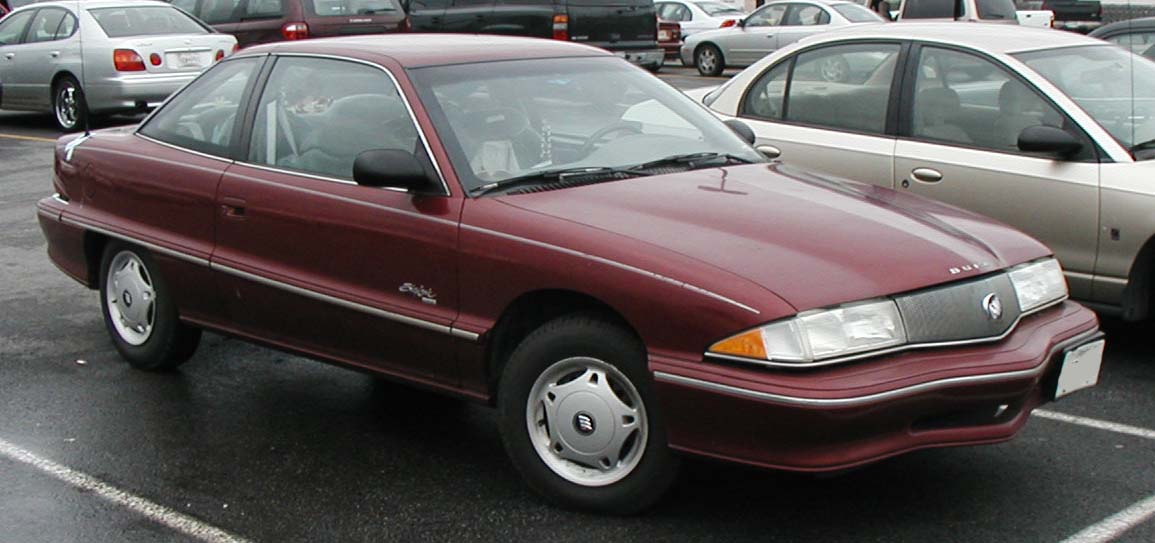
One of these days, I will put together a list of the ugliest cars in history...the 1992-1998 Buick Skylark will definitely be on that list. There is nothing redeeming about this remake, which in my opinion ruins the Skylark name for good. You can just picture the designers at GM writing ideas on a whiteboard on how to make a throwback to Buick's designs from the '50s and '60s. Pointed front end? Check. Covered rear wheels? Check. The only missing design cue is portholes. The rear end is stubby, the front end is hideous, the entire car is wrapped in ugly body cladding (and the pinstripe does not help), and the interior is a typical overdesigned relic of the early '90s from GM.


1964 Chevy Impala
2006-present Chevy Impala
See my article on the Chevy Impala - nuff said.


1968 Dodge Charger
2006-2010 Dodge Charger
The Charger has always been a 2-door, so why did Dodge resurrect the name as a -door after a 19 year pause? Don't get me wrong, I actually think the new Charger is a cool car and has much more personality than its Japanese counterparts, but it is such a departure from what the Charger has been historically. To recap: not a bad car, but not what I would have expected.


1968 Pontiac GTO
2005 Pontiac GTO
The old GTO is a properly cool muscle car designed by the late great John DeLorean. The new GTO, which was produced from 2004-2006, has a large cult following, but I never liked it. 5 years ago, it was the cheapest way to get 400+ horsepower for under $30k, but the styling is so boring. GM thought it could simply rebadge an Australian Holden Commodore as a Pontiac in the States, but it ended up looking more like a mid-90s Grand Am than what a modern-day GTO should look like. The interior was also standard GM fare - nothing fun or special.
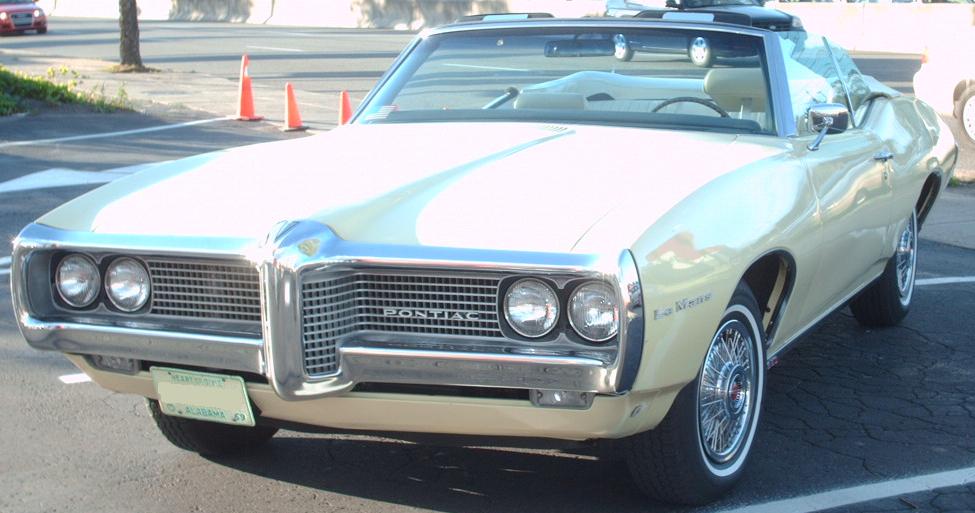
1969 Pontiac LeMans

1992 Pontiac LeMans
A lot of things bother me about this early-90s remake of the LeMans, but most of all is that ugly black plastic on the C-pillar, which exists because it was a cheap way to cover up a bad design. Everything about this car is ugly, uncool, and cheap. This was the start to GM's maligned relationship with Daewoo, which ended up flooding the American and European markets (through Opel) with small, ugly designs. Why did they have to name this little runt the "LeMans"? GM's strategy in the 2000s was better: to name its rebadged Daewoos as generic Asian or Italian sounding names such as "Lacetti", "Aveo", "Leganza", and "Matiz", so if the model didn't work out, it didn't ruin decades of storied American muscle car history, such as the LeMans.


1937 Lincoln Zephyr
2006 Lincoln Zephyr
Oh, I get the connection Lincoln was trying to make here....NOT. The use of the Zephyr nameplate was an obvious attempt to resurrect Lincoln's historic American roots. However, that goes against Lincoln's attempted strategy to sell more cars to younger folks. The word Zephyr doesn't sound cool - it sounds like something your grandfather would drive. Maybe that's why they changed the name to the more forgettable MKZ after 1 year. Smart move.


1968 Saab 99
1994 Saab 900
1998 Saab 9-3
2005 Saab 9-3 SportSedan
The last car I'll mention is what is now called the Saab 9-3, but whose roots stem from earlier teardropped Saab 90s. After decades of hatchback and notchback sedans, Saab's new owner, GM, decided to use its Malibu-based global architecture to underpin the new 9-3. This meant a more traditional sedan, which sucked all the intrigue and uniqueness out of the Saab. GM's rationale was rational - it needed to find a cost effective way to bring Saab onto its architecture and still manage to keep some of the quirky design features that attracted Saab buyers (pop-out cupholders, ignition on the center console, airplane-like dashboard, etc.). The problem was that GM compromised too much and the 9-3 (and 9-5) became uncompetitive entries in an already crowded field of entry-luxury sedans. Today, Saab is in danger of extinction, and I wonder if GM's takeover is what set the ball in motion.