|
| Chrysler PT Cruiser |
There are a handful of car models who were once celebrated, but have since lost their luster. These cars usually fit into 2 buckets:
- Cars that were awesome when they were released, but have since lost their novelty
- Cars that were awesome in the 50s/60s/70s, but due to cost cutting have become terrible. This is an American phenomenon, since Japanese car makers have not been in the states long enough to establish meaningful brand history.
I've highlighted a few examples - click through to see.
Category #1: Cars that have lost their novelty |
| Chrysler PT Cruiser |
When it first came out in 2000, there was nothing else like the PT Cruiser. It had dramatic retro styling, was incredibly affordable, and looked like a mix between a hot rod and an SUV/crossover (neither of which it actually was). However, the Cruiser did not age well, and as you saw more on the road its novelty wore off fast. If you look close enough, you'll see a crummy compact car whose quality could not compete with the Japanese offerings. Chrysler stopped making the Cruiser last year.
 |
| Mini Cooper |
When BMW released the new Mini Cooper in 2001, it was very popular. Its UK roots and cute styling gave the car panache, and BMW made sure the car was of great quality. However, for $20-30k, I don't think this car is a very good value. It's too small and impractical for people in the suburbs or rural areas, and while the engine is quick against the car's light weight, it's not a sports car by any means. Also, 10 years later, I see too many on the road and I'm sick of the styling, which reminds me of Austin Powers. Mini has tried to broaden its range to SUVs, convertibles, coupes, and the slightly larger Clubman, probably because people have begun to lose fondness for the little car.
 |
| Scion xB |
In 2003, Toyota's new Scion brand was very polarizing - some people thought their designs were cool, but others found them to be ugly and juvenile. In the end, Scions have seemed to appeal to young teenagers who want to customize their cars, and paradoxically, retirees who need an affordable compact hatchback. I believe Scion's current designs are watered down and have lost their edginess. They have gained many of the androgynous bumps and lumps that Toyota's main line suffers from. It's no secret that the brand has been struggling as of late, since parents are no longer able to afford to buy a car for their kids, and retirees are holding on their old cars longer. I wonder how sustainable the brand will be going forward.
 |
| Audi TT |
The Audi TT looks like a cross between a Porsche 911 and VW Beetle, and was appropriately priced somewhere in the middle. Its retro styling, which was unique when it was released in 1998, now looks more cutesy than cute. The latest iteration does have a more masculine, sporty stance, but if I was to spend $35-40k on a sports car, I'm not sure the TT would make the list. Why not get an A5, which has similar performance characteristics, but has enough space to feel comfortable on a long trip? The base TT also does not have the blistering fast qualities you would expect from a car that aspires to be a sports car.
 |
| Chrysler 300 |
For a number of reasons, the 300 was an instant hit when it was released in 2005. It was the first decent looking product Chrysler had produced in years and marked a departure from the company's cab-forward designs. The design cues were a smart, modern take on the original 300C. The interior was nothing to write home about, but the exterior was a good mix of retro and modern. 6 years later, I think the front end is too retro for today's tastes, and the car has become popular with retirees, fleets, and livery. Sometimes you'll see a rapper wannabe who has distastefully put 24-inch DUB wheels on the car and swapped out the grille. I see too many on the road, and the styling looks too commonplace today. The updated iteration in 2011 looks almost identical to the outgoing model, although Chrysler claims every body part is new...
Category #2: Remakes gone bad |
1969 Chevy Nova
|
 |
| 1985-1988 Chevy Nova |
Can anyone help me understand how the top picture became the bottom picture? A Hummer and a Volt has more in common. The Nova has historically been a cool car - a muscle car by any standard. When GM teamed up with Toyota in 1985 to resurrect the Nova name, the ugly rebadged Corolla they concocted sullied the Nova name forever, never to appear in Chevy's lineup ever again. It was so embarrassing, Chevy had to create the Geo brand to sell their Toyota joint-venture cars. The Nova became the equally ugly and unloved Geo Prism.
 |
| 1967 Buick Skylark |
 |
| 1992 Buick Skylark |
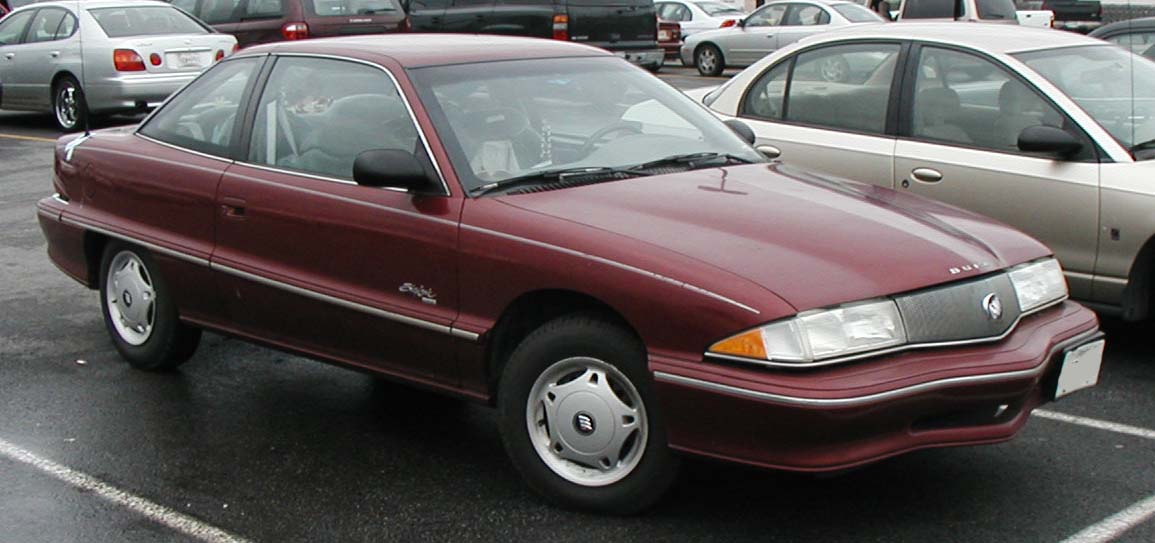
One of these days, I will put together a list of the ugliest cars in history...the 1992-1998 Buick Skylark will definitely be on that list. There is nothing redeeming about this remake, which in my opinion ruins the Skylark name for good. You can just picture the designers at GM writing ideas on a whiteboard on how to make a throwback to Buick's designs from the '50s and '60s. Pointed front end? Check. Covered rear wheels? Check. The only missing design cue is portholes. The rear end is stubby, the front end is hideous, the entire car is wrapped in ugly body cladding (and the pinstripe does not help), and the interior is a typical overdesigned relic of the early '90s from GM.
 |
| 1964 Chevy Impala |
 |
| 2006-present Chevy Impala |
See my
article on the Chevy Impala - nuff said.
 |
| 1968 Dodge Charger |
 |
| 2006-2010 Dodge Charger |
The Charger has always been a 2-door, so why did Dodge resurrect the name as a -door after a 19 year pause? Don't get me wrong, I actually think the new Charger is a cool car and has much more personality than its Japanese counterparts, but it is such a departure from what the Charger has been historically. To recap: not a bad car, but not what I would have expected.
 |
| 1968 Pontiac GTO |
 |
| 2005 Pontiac GTO |
The old GTO is a properly cool muscle car designed by the late great John DeLorean. The new GTO, which was produced from 2004-2006, has a large cult following, but I never liked it. 5 years ago, it was the cheapest way to get 400+ horsepower for under $30k, but the styling is so boring. GM thought it could simply rebadge an Australian Holden Commodore as a Pontiac in the States, but it ended up looking more like a mid-90s Grand Am than what a modern-day GTO should look like. The interior was also standard GM fare - nothing fun or special.
 |
| 1969 Pontiac LeMans |
 |
| 1992 Pontiac LeMans |
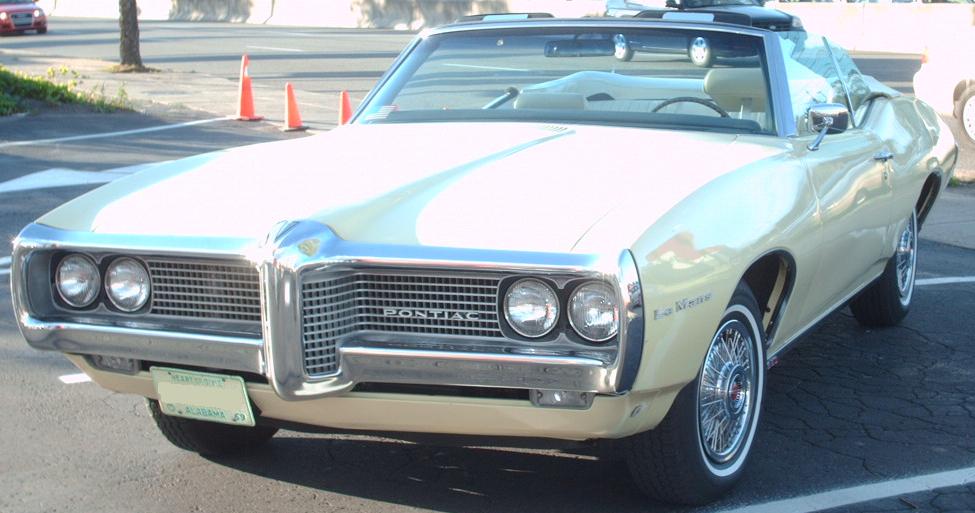
A lot of things bother me about this early-90s remake of the LeMans, but most of all is that ugly black plastic on the C-pillar, which exists because it was a cheap way to cover up a bad design. Everything about this car is ugly, uncool, and cheap. This was the start to GM's maligned relationship with Daewoo, which ended up flooding the American and European markets (through Opel) with small, ugly designs. Why did they have to name this little runt the "LeMans"? GM's strategy in the 2000s was better: to name its rebadged Daewoos as generic Asian or Italian sounding names such as "Lacetti", "Aveo", "Leganza", and "Matiz", so if the model didn't work out, it didn't ruin decades of storied American muscle car history, such as the LeMans.
 |
| 1937 Lincoln Zephyr |
 |
| 2006 Lincoln Zephyr |
Oh, I get the connection Lincoln was trying to make here....NOT. The use of the Zephyr nameplate was an obvious attempt to resurrect Lincoln's historic American roots. However, that goes against Lincoln's attempted strategy to sell more cars to younger folks. The word Zephyr doesn't sound cool - it sounds like something your grandfather would drive. Maybe that's why they changed the name to the more forgettable MKZ after 1 year. Smart move.
 |
| 1968 Saab 99 |
 |
| 1994 Saab 900 |
 |
| 1998 Saab 9-3 |
 |
| 2005 Saab 9-3 SportSedan |
The last car I'll mention is what is now called the Saab 9-3, but whose roots stem from earlier teardropped Saab 90s. After decades of hatchback and notchback sedans, Saab's new owner, GM, decided to use its Malibu-based global architecture to underpin the new 9-3. This meant a more traditional sedan, which sucked all the intrigue and uniqueness out of the Saab. GM's rationale was rational - it needed to find a cost effective way to bring Saab onto its architecture and still manage to keep some of the quirky design features that attracted Saab buyers (pop-out cupholders, ignition on the center console, airplane-like dashboard, etc.). The problem was that GM compromised too much and the 9-3 (and 9-5) became uncompetitive entries in an already crowded field of entry-luxury sedans. Today, Saab is in danger of extinction, and I wonder if GM's takeover is what set the ball in motion.